

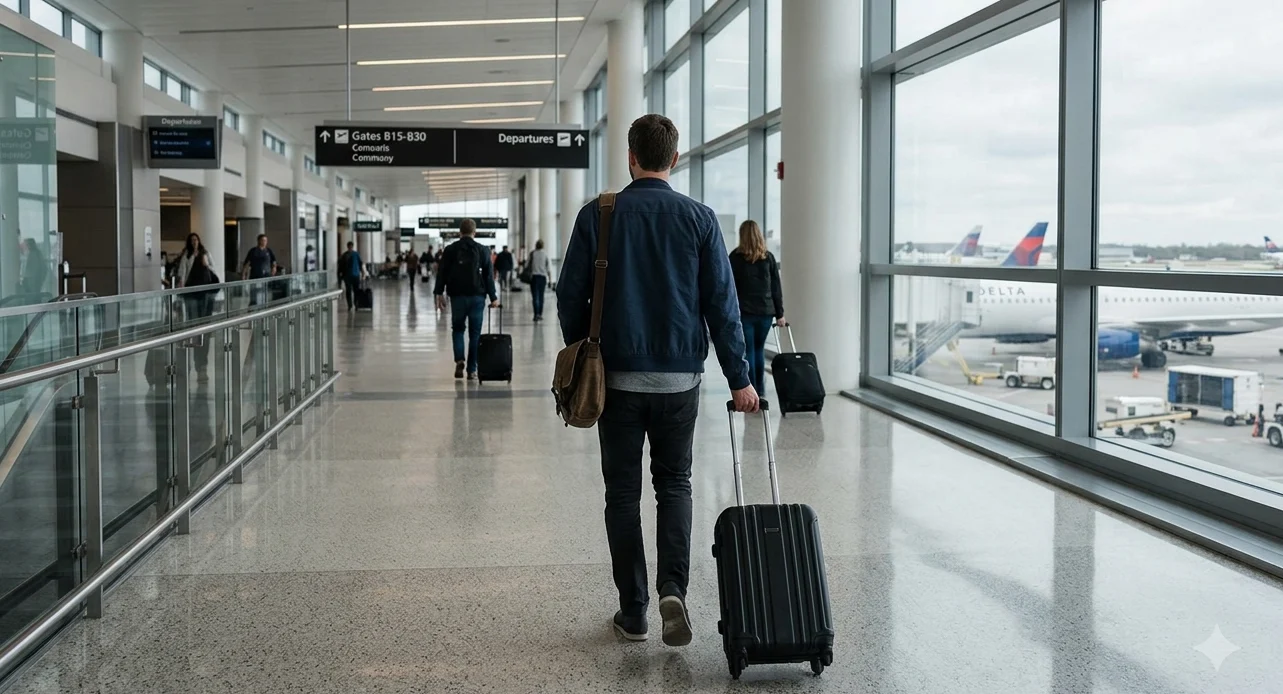
Dragging a fifty-pound wheeled suitcase up the narrow spiral staircase of an ancient Parisian walkup or bouncing it across the uneven cobblestones of Rome is a rite of passage no traveler needs to experience twice. Beyond the sheer physical exhaustion, checking a bag ties you to baggage claim carousels, exposes you to transit delays, and turns simple train connections into frantic dashes through crowded terminals.
Traveling through Europe for fourteen days with nothing more than a single carry-on and a personal item is not an exercise in ascetic deprivation. It is an intentional operational strategy. When executed properly, packing light does not limit your style or leave you wearing damp, hand-washed socks every morning. It simply requires understanding European transit constraints, curating a ruthless wardrobe matrix, and mastering the spatial mechanics of modern packing.
Luggage Geometry: Navigating European Size and Weight Restrictions
The first mistake most American travelers make occurs before they even open their closets: choosing a bag built for domestic US travel rather than European regulations.
In the United States, major carriers routinely accept carry-on bags measuring up to 22 by 14 by 9 inches. In Europe, however, luggage dimensions are dictated by a tighter standard. Most continental carriers and budget airlines enforce a standard overhead limit of 55 by 40 by 20 centimeters, which translates roughly to 21.6 by 15.7 by 7.8 inches. That single missing inch of depth can turn an expensive American roller bag into an oversized gate-check penalty.
Furthermore, European airlines enforce strict weight limits on cabin luggage, typically capping overhead bags between 8 and 10 kilograms (roughly 17.6 to 22 pounds). Ground crews at European hubs actively weigh carry-ons at the check-in queue or boarding gate.
To navigate these boundaries, reconsider your luggage format:
-
Soft-sided travel packs: A 35- to 40-liter backpack engineered specifically for travel remains the ultimate weapon for European mobility. Soft bags conform easily to airline sizers, weigh less when empty, and glide over cobblestone streets, broken sidewalks, and metro turnstiles without resistance.
-
Two-wheeled rolling bags: If you prefer wheels, choose a two-wheeled roller with inset, recessed wheels over a four-wheeled spinner. Spinner wheels stick out, adding two to three inches to the total measured length of your suitcase while eating away at internal packing capacity. They also break easily when forced across centuries-old stone pavers.
-
The under-seat personal item: Treat your personal item—whether a compact daypack, tote, or messenger bag—as high-value real estate. Use it to store your densest essentials, electronics, and immediate travel documents, preserving your main overhead bag for clothing.
The Wardrobe Matrix: Cohesion Over Volume
Packing for two weeks does not mean packing fourteen separate outfits. The secret to long-haul carry-on travel is building a cohesive capsule wardrobe where every single top matches every single bottom.
When individual pieces cannot be worn in multiple configurations, they become dead weight. By sticking to a disciplined color palette—such as navy, charcoal, olive, white, and tan—you multiply your outfit options exponentially while cutting physical bulk in half.
The Core Selection
A reliable two-week template relies on ten to twelve versatile garments:
-
Four tops: A balanced mix of two breathable short-sleeve tees and two collared button-down shirts or blouses. Choose classic collars that transition smoothly from an afternoon museum visit to a dimly lit bistro.
-
Three bottoms: One pair of well-fitted dark jeans or tailored chinos, one pair of lightweight travel trousers or linen pants, and an optional pair of tailored shorts or a versatile midi skirt depending on the season.
-
Two layering garments: One lightweight knit crewneck sweater (merino wool is ideal) and a structured overshirt, tailored blazer, or utility jacket.
-
One packable weather shell: A waterproof, wind-resistant rain jacket that compresses down into its own pocket.
-
Undergarments: Five pairs of quick-dry underwear, five pairs of breathable socks, and two comfortable sleepwear pieces.
Fabric Selection Matters More Than Style
Cotton is heavy, absorbs moisture, wrinkles instantly, and takes an eternity to dry on an indoor laundry rack. For efficient travel, fabric technology does the heavy lifting.
Prioritize merino wool and performance blends. Merino wool is naturally thermoregulating, meaning it keeps you warm on crisp mornings and breathes easily under midday heat. More importantly, its natural fibers resist odor-causing bacteria, allowing you to wear a merino t-shirt or sweater three or four times between washes without a hint of odor.
For warmer Mediterranean trips, lightweight linen and technical cotton-nylon blends offer breathability without retaining moisture.
The Footwear Equation: The Strict Two-Pair Ceiling
Shoes are the ultimate space killers in any suitcase. They are heavy, rigid, irregularly shaped, and impossible to compress.
The rule for two weeks in Europe is absolute: pack one pair, wear the other, and stop there.
Your primary footwear must be an exceptionally supportive walking shoe capable of handling ten to fifteen miles of walking per day over slick stones, ancient stairs, and uneven asphalt. Modern leather sneakers, minimalist trail runners in subdued colorways, or classic blundstone-style boots blend comfort with European street style.
Your second pair should serve as a specialized complement. In the summer, choose a packable leather walking sandal or a clean espadrille. In cooler months, pack an unlined loafer, flat dress shoe, or sleek Chelsea boot that elevates an evening outfit without occupying half your suitcase. Never pack brand-new, unbroken shoes for a European itinerary.
The Laundry Strategy: Pack for Five Days, Reset on Day Six
The psychological hurdle that causes travelers to overpack is the subconscious assumption that they cannot wash clothes while on vacation. In reality, nobody packs for fourteen days; you pack for five days and do laundry twice.
Managing laundry abroad takes minimal effort once you understand your options:
-
The hotel sink wash: Small garments—socks and underwear—should never accumulate. Wash them in your hotel sink every two to three nights using a few drops of shampoo or concentrated laundry sheets. Roll the washed items tightly inside a dry bath towel to squeeze out excess moisture, then hang them to air-dry. Technical fabrics and merino dry fully within eight to twelve hours.
-
The neighborhood laundromat: European self-service laundromats (lavanderias or laveries) are clean, efficient, and ubiquitous in residential city neighborhoods. Spending ninety minutes at a laundromat on day six or seven allows you to wash and dry an entire load of clothes while sipping an espresso at a nearby cafe and catching up on a book.
-
Wash-and-fold services: Many urban laundromats and boutique guest houses offer wash-and-fold services for fifteen to twenty euros. Dropping a laundry bag off in the morning and picking it up folded that evening preserves your entire sightseeing schedule.
Spatial Mechanics: Compression and Cavity Packing
How you pack determines how much fits inside your bag. Haphazard folding creates dead air and unruly piles that shift in transit.
Invest in compression packing cubes. Unlike standard nylon storage pouches, compression cubes feature a secondary perimeter zipper that forcibly pushes trapped air out of your garments, flattening soft fabrics into compact, stackable bricks. Group your garments logically: one medium cube for tops, one for bottoms, and a small cube for undergarments and socks.
Maximize interior volume by utilizing natural geometric cavities:
-
Stuff your packed shoes with rolled socks, charging cables, or fragile souvenirs to protect their shape and reclaim dead space.
-
Place shoes along the bottom spine of the suitcase (near the wheels or bottom edge of the backpack) to keep the center of gravity low and stable.
-
Slide flat items—like an e-reader, document folders, or a thin rain shell—into internal mesh dividers or exterior perimeter pockets.
Streamlining Toiletries and Electronics
Navigating security lines at European airports requires strict adherence to international liquid limits. Containers must hold no more than 100 milliliters (3.4 ounces) and fit comfortably inside a single clear, resealable quart-sized bag.
Eliminate the liquid struggle by converting liquids to solid alternatives. Swap liquid shampoo, body wash, and face cleanser for solid beauty bars. Replace toothpaste tubes with chewable toothpaste tablets, and switch liquid laundry soap for ultra-thin, dry laundry detergent sheets. You save critical space in your liquid pouch for non-negotiable items like prescription face serums, sunscreen, or contact lens solution.
Remember that Europe is not a remote wilderness. If you run out of body lotion, deodorant, or shaving cream, visiting a local European pharmacy or market (farmacia, parapharmacie, or apotheke) is convenient, inexpensive, and an enjoyable cultural experience in itself.
For electronics, leave single-use charging bricks behind. Carry a single, high-output GaN (Gallium Nitride) wall charger equipped with multiple USB-C ports alongside a couple of universal plug adapters. A compact 65-watt charger can power your smartphone, camera, tablet, and external battery bank simultaneously from a single wall outlet, drastically reducing cable clutter.
The Transit Uniform: Reclaiming Suitcase Real Estate
Your travel-day outfit is not just what you wear; it is an extension of your luggage capacity.
On transit days—especially international flight days when airline agents are most likely to inspect bag dimensions and weights—wear your bulkiest, heaviest items on your person. Wear your structured jacket, your heaviest walking shoes, your denim jeans, and your knit sweater onto the aircraft.
Cabin temperatures on long-haul flights are notoriously cool, making layers functional during transit. Once you clear the boarding gate and settle into your seat, you can easily slip off your jacket and sweater and place them in the overhead bin. By keeping heavy layers out of your bag, your carry-on remains light, compact, and effortlessly compliant with strict airline scales.
Traveling across Europe with a single carry-on transforms the entire rhythm of your vacation. You bypass check-in queues, exit arrival halls minutes after landing, step effortlessly aboard high-speed trains, and stroll through historic city centers without a mountain of luggage anchoring you down. When your bag is light, your trip is unburdened, leaving you free to focus on the sights, meals, and memories that brought you across the ocean in the first place.

Comments are closed.