

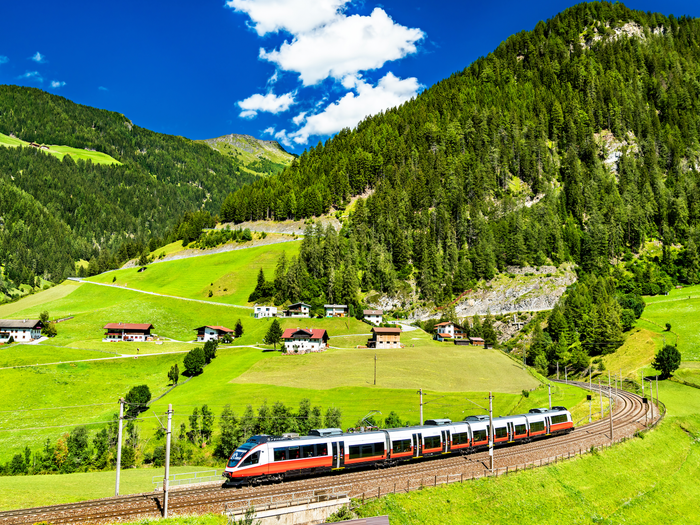
For generations of American travelers, the Eurail pass has held near-mythic status. It evokes a romantic vision of mid-century exploration: buying a single paper voucher, showing up at a grand nineteenth-century station, stepping onto any train that catches your eye, and waking up in an entirely new country without opening your wallet again.
That idyllic, carefree image no longer reflects the day-to-day reality of European rail networks. Over the past two decades, national railway operators across Europe quietly restructured their systems around modern airline economics. High-speed lines replaced leisurely express routes, yield-management algorithms replaced fixed mileage fares, and mandatory seat reservations became standard practice across major international routes.
Today, purchasing a Eurail Global Pass without doing the math can easily turn into an expensive logistical headache. Conversely, buying point-to-point tickets without understanding booking windows can leave you paying exorbitant last-minute walk-up fares. Deciding between a multi-day rail pass and individual tickets requires looking past the nostalgia, understanding how modern European ticketing works, and matching your ticket purchase directly to your personal travel style.
The Mechanics of Modern European Train Pricing
To understand which purchase makes financial sense, you first need to understand how train tickets are priced across the continent.
European railway operators divide their tickets into two broad commercial buckets:
-
Fixed-rate regional routes: Secondary and commuter trains (like regional lines in Italy, France, or Germany) generally operate on fixed or distance-based pricing. A regional ticket from Florence to Pisa costs the same whether you buy it three months ahead or three minutes before departure. There are no reserved seats, and tickets rarely sell out.
-
Dynamic high-speed routes: Flagship high-speed services—such as France’s TGV, Germany’s ICE, Italy’s Frecciarossa, and Spain’s AVE—operate on dynamic yield management identical to commercial airlines. Operators release tickets between two and six months before the departure date. Early buyers secure heavily discounted promotional fares (like SNCF’s Prem’s fares, Deutsche Bahn’s Sparpreis tickets, or Trenitalia’s Super Economy rates). As departure nears and carriages fill up, those prices rise steeply, often doubling or tripling by travel day.
A rail pass operates on an entirely different financial logic: a prepaid, flat-rate daily allowance. When you purchase a flexible four-day or seven-day Eurail Pass, you are essentially pre-paying a fixed dollar amount for each day you step on a train.
If your average travel day on a pass costs around seventy to eighty dollars, using a pass day for a fifteen-dollar regional hopper between Brussels and Ghent is a massive waste of money. Using that same pass day for a last-minute, long-distance journey across Germany or Austria that would otherwise cost one hundred and fifty dollars at the counter, however, represents outstanding value.
The Seat Reservation Trap: The Hidden Cost of Rail Passes
The single biggest source of frustration for American travelers using a Eurail Pass is discovering that a pass is frequently not an all-inclusive ticket to ride. On many of Europe’s premier high-speed lines, a rail pass merely grants you the right to purchase a mandatory seat reservation.
These reservations are not optional upgrades for extra comfort; they are legally mandated boarding requirements. If you board without one, you face hefty onboard penalty fines or immediate removal at the next station.
This system creates two major complications for passholders:
-
Direct financial surcharges: Seat reservation fees erode the value proposition of a pass. In Italy, every domestic high-speed Frecciarossa leg requires a mandatory ten to thirteen euro fee. In France, domestic TGV journeys mandate reservations costing between ten and twenty euros. High-speed cross-border services like Eurostar (running between London, Paris, Brussels, and Amsterdam) charge passholders steep reservation fees starting around thirty euros, running upwards of forty euros for peak departures.
-
Restricted passholder seat quotas: On high-demand routes, operators do not open every empty seat to rail passholders. Lines like Eurostar, international TGVs, and overnight sleeper services cap the number of seats allocated to passholders per train. Once that quota sells out, a passholder cannot board that departure, even if dozens of regular full-fare tickets remain available for purchase online.
For travelers who bought a rail pass specifically for spontaneity, this dynamic comes as a jarring surprise. If you still have to reserve your seat weeks in advance and pay a surcharge on top of your pass cost, the operational freedom of the pass largely disappears.
Regional Realities: Where Passes Excel and Where They Falter
European rail is not a monolithic network. Operating models, infrastructure, and regulations differ sharply by geographic region. Where you intend to travel plays a massive role in determining your ticketing strategy.
The Flexible Corridors: Germany, Austria, and Great Britain
In Central and Northern Europe, the traditional spirit of rail travel remains largely alive. In countries like Germany (Deutsche Bahn), Austria (ÖBB), and the United Kingdom (National Rail), seat reservations on high-speed and intercity trains are almost entirely optional.
On a German Intercity Express (ICE) or Austrian Railjet, a passholder can genuinely walk onto the platform, check the overhead car displays, step into any coach with an unreserved seat, and ride. If your route changes on a whim, you simply switch platforms without bureaucratic hurdles or extra fees.
Because walk-up fares on long-distance German and Austrian routes are notoriously expensive, a rail pass in this region offers genuine spontaneity alongside legitimate cost savings.
The Highly Regulated Corridors: France, Spain, and Italy
In Western and Southern Europe, the pendulum swings in the opposite direction. France, Spain, and Italy enforce strict, airline-style boarding protocols.
In Spain, national rail operator Renfe mandates seat reservations on almost every long-distance train, and securing those reservations with a Eurail pass historically requires visiting a physical ticket window in a Spanish station. Furthermore, Spain’s rail network is now fiercely competitive, with low-cost operators like Ouigo and Iryo driving point-to-point ticket prices down to record lows.
In Italy, state operator Trenitalia competes directly with private high-speed operator Italo on trunk routes like Milan-Rome-Naples. Because Italo does not accept Eurail passes, passholders miss out on half the available high-speed capacity. When combined with inexpensive advance-purchase fares, buying point-to-point tickets online in Italy and Spain is almost universally cheaper and less restrictive than managing a pass.
The Swiss Alpine Exception
Switzerland features arguably the finest railway system in the world, but it requires specialized financial calculations. Eurail passes are accepted on standard Swiss federal trains, but private mountain railways, cogwheels, and panoramic tourist routes (like the Jungfraubahn or the Glacier Express) typically offer only partial discounts or require expensive supplemental reservations.
For travelers focusing strictly on Switzerland, a dedicated national pass—such as the Swiss Travel Pass or the Swiss Half Fare Card—consistently outperforms a general Eurail pass. The Swiss Travel Pass covers not just long-distance trains, but also municipal buses, trams, lake ferries, and admission to hundreds of museums, providing a seamless regional package that Eurail cannot match.
Eastern and Central Europe
In countries such as Poland, the Czech Republic, Slovakia, and Hungary, base train fares remain remarkably affordable by Western standards. Standard point-to-point intercity tickets frequently cost between ten and thirty dollars, even when purchased on short notice. Carrying an expensive Eurail pass across Eastern Europe rarely makes economic sense, as the daily amortized cost of the pass will usually exceed the cost of buying standard tickets directly at the station.
A Pragmatic Decision Framework
Deciding which route to take comes down to answering three fundamental questions about your upcoming trip.
How locked-in is your schedule?
If your itinerary is set in stone—you already have non-refundable hotel bookings, concert tickets, or dinner reservations in specific cities on specific dates—point-to-point tickets booked two to three months in advance will almost always beat a rail pass on price. By locking in your routes early through official operator apps (like SNCF Connect, Deutsche Bahn Navigator, or Trenitalia), you access the lowest promotional tiers without paying pass markup or dealing with quota caps.
How much ground are you covering in a single day?
A rail pass shines when you cover massive distances across borders on short notice. If your trip involves hopping from Munich to Vienna, spending two days, then heading to Zurich and onward to Hamburg, the pass eliminates the extreme price penalties of booking long-haul journeys on short notice.
Who is in your travel party?
Demographics can tilt the financial math heavily in favor of rail passes. Eurail offers substantial youth discounts for travelers aged twenty-seven and younger, senior discounts for those over sixty, and allows up to two children aged eleven and under to travel completely free with an adult passholder. For a family traveling with school-age kids, the savings from the complimentary child passes can easily offset any additional seat reservation fees.
Modern European train travel is faster, more expansive, and more comfortable than ever, but it is no longer one-size-fits-all. Treat the Eurail Pass not as a mandatory rite of passage, but as a specialized travel tool. When you calculate your true daily travel costs, factor in the regional reservation rules, and evaluate your appetite for pre-trip planning, the right ticket choice becomes clear before you ever pack your bags.

Comments are closed.